Finding the Way Together: designing inclusive wayfinding (graduation project)
How can we make wayfinding in Dutch metro stations more inclusive?
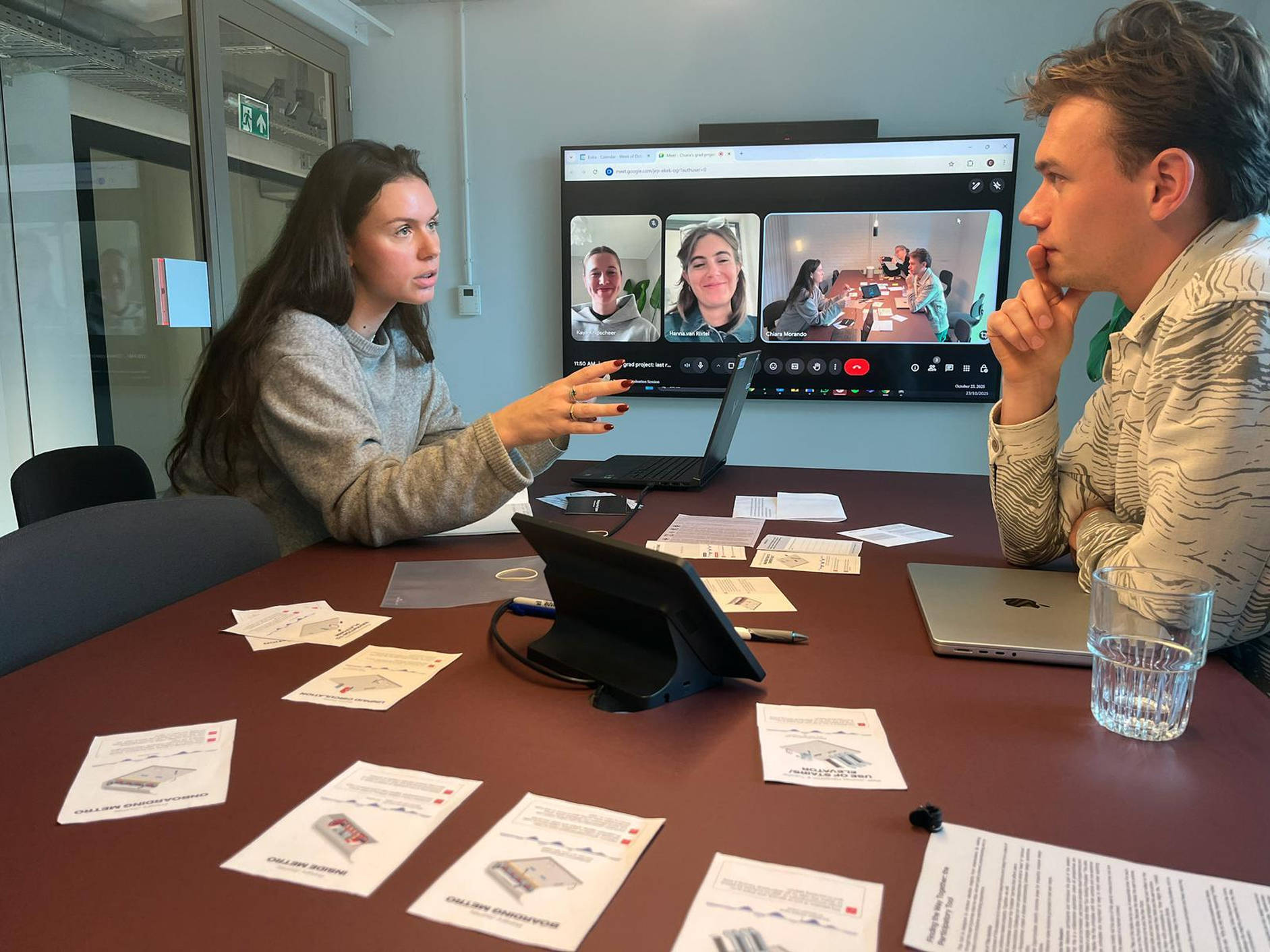
My name is Chiara Morando, and I recently completed my Master’s in Strategic Product Design at TU Delft. For my graduation project, I joined Fabrique, where I had the chance to work on a topic that felt both urgent and deeply connected to Fabrique’s practice, especially for their UX in Public Space department: inclusive wayfinding in Dutch metro stations.
I came to Fabrique with the ambition to explore how designers can be better supported in addressing inclusivity in complex public environments. Public transportation is designed to be accessible to everyone, yet for many people, navigating a metro station independently remains a challenge. My graduation project grew from that tension.
Why inclusive wayfinding?
My thesis focuses on wayfinding in Dutch public transportation, specifically in metro stations. Within this context, I investigated how design practitioners can be supported in creating more inclusive wayfinding systems.
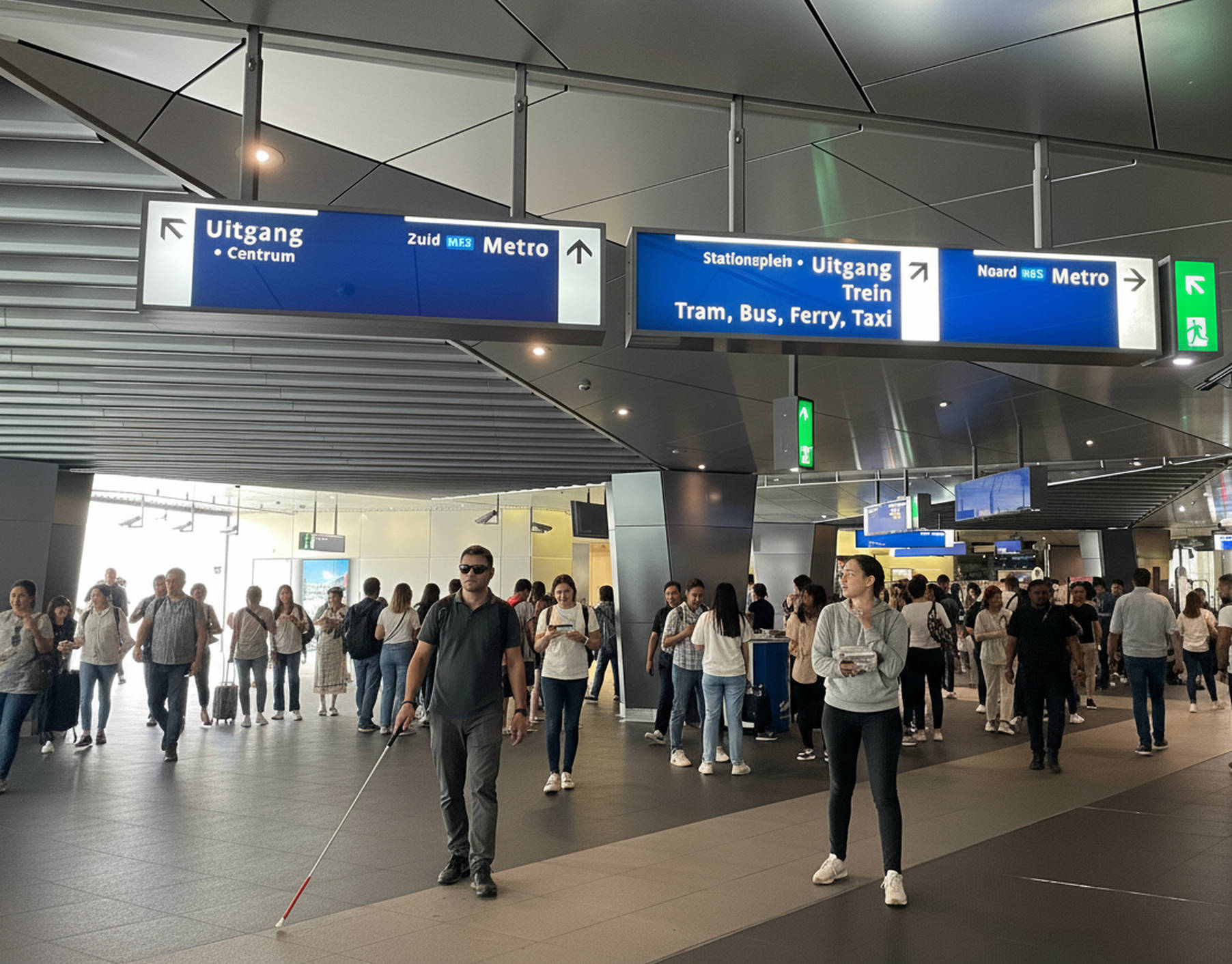
Even though accessibility is increasingly discussed, it is still often framed in physical terms: ramps, elevators, or step-free access. At the same time, informational barriers remain largely overlooked. These barriers affect many people, but particularly those with visual impairments and low literacy. These are groups that often fall outside strict regulatory definitions of disability, making them less visible in design processes and policies.
Metro stations are intense environments. They are busy, noisy, and time-pressured. Information is layered, fragmented, and often inconsistent between cities and even between different stations within a city. For people who rely on clear, legible, and predictable information to navigate, these conditions can quickly undermine independence and confidence. What became clear early on is that these challenges are rarely the result of a single design flaw. Instead, they are symptoms of broader, systemic issues.
This led to the central question of my graduation project:
How can inclusive design be strategically implemented to improve wayfinding in Dutch metro stations for people with visual impairments and low-literate users?
From frustration to a strategic opportunity
This project was not initiated by a formal client brief. It started from a place of personal frustration. Seeing exclusion embedded in systems that are meant to serve everyone made me reflect on the role designers play in shaping public environments.
One of the key insights from my research was that inclusive wayfinding cannot be solved by adding one more sign or guideline. In the Dutch context, metro systems are shaped by fragmented regional governance, resulting in inconsistent strategies across cities and networks. A single, prescriptive solution would therefore never be enough.
Instead, the real opportunity lies in supporting designers, those operating between policy, infrastructure, and user experience, in navigating this complexity. That insight shifted the focus of my project away from designing a specific intervention toward creating something more adaptable: a strategic framework that helps designers reflect, make informed decisions, and advocate for inclusivity within real-world constraints.
Finding the Way Together
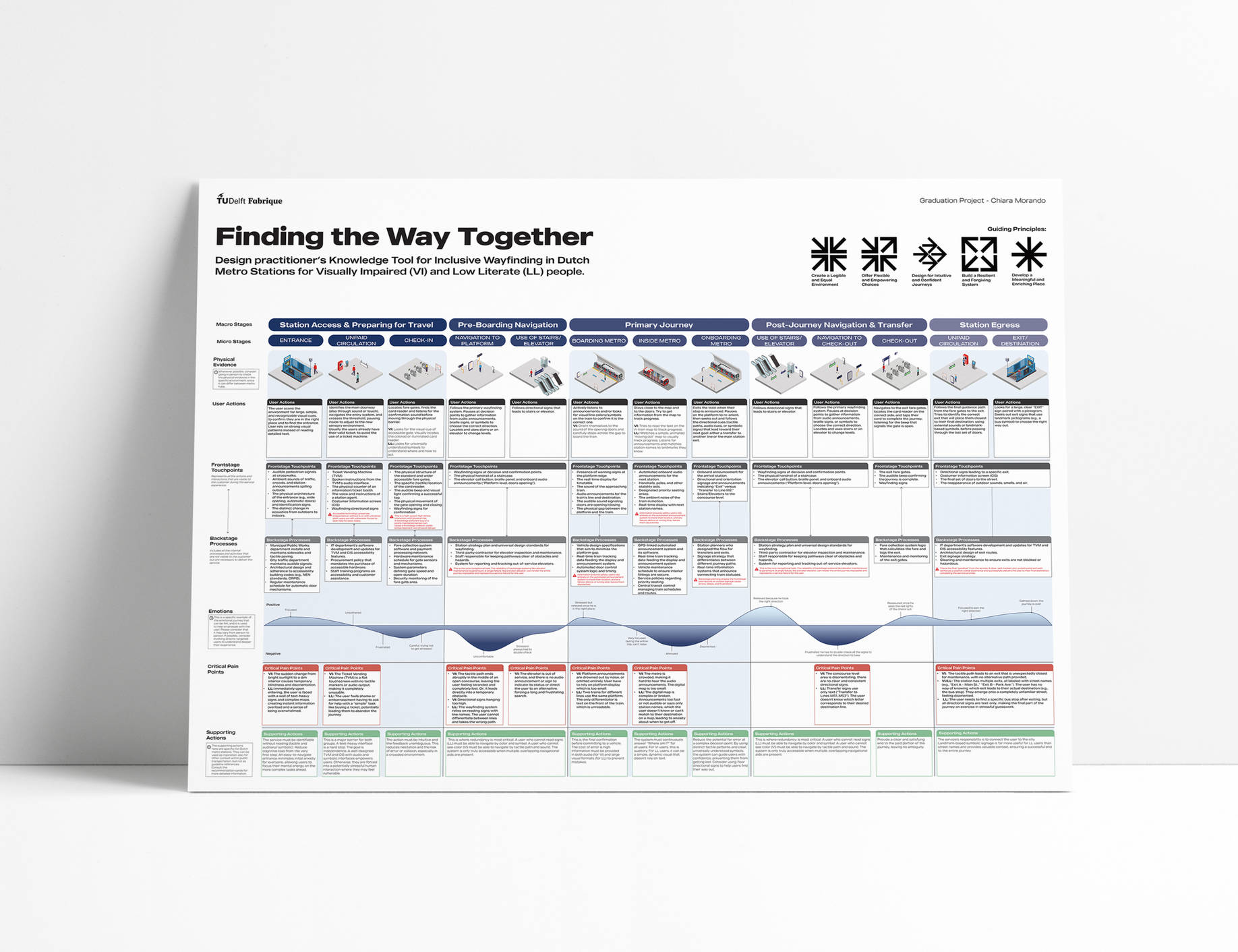
The final outcome of my graduation project is a strategic framework called “Finding the Way Together.” Rather than offering a definitive solution, the framework is designed to guide designers through diagnosis, ideation, and implementation of inclusive wayfinding systems.
It consists of three interconnected components:
- The Knowledge Tool, which provides an evidence-based overview of the metro travel journey, mapping user actions, emotional experiences, critical pain points, and underlying organisational processes.
- The Participatory Tool, created to support co-creation sessions with stakeholders by translating complex insights into tangible elements and a shared language.
- The Recommendation Cards, which help bridge analysis and action by offering concrete prompts to guide ideation and implementation.
Together, these components aim to raise awareness, reduce assumptions, and position inclusivity as a core design requirement, rather than an afterthought. The framework encourages designers to move beyond compliance and to approach wayfinding as a human-centred, systemic challenge.
Developing the project at Fabrique
Working on this project at Fabrique was fundamental to both the process and the outcome. Being embedded in an agency that works on designing interaction in public spaces meant that the project was grounded in practice.
One of the most important aspects of being at Fabrique was the opportunity to get closer to the end users. Thanks to the studio’s network and openness, I could more easily connect with people with lived experience, engage in conversations and interviews, and even explore metro environments together. Experiencing these spaces side by side, rather than only observing from a distance, deeply shaped my understanding of the barriers people face when navigating metro stations independently.
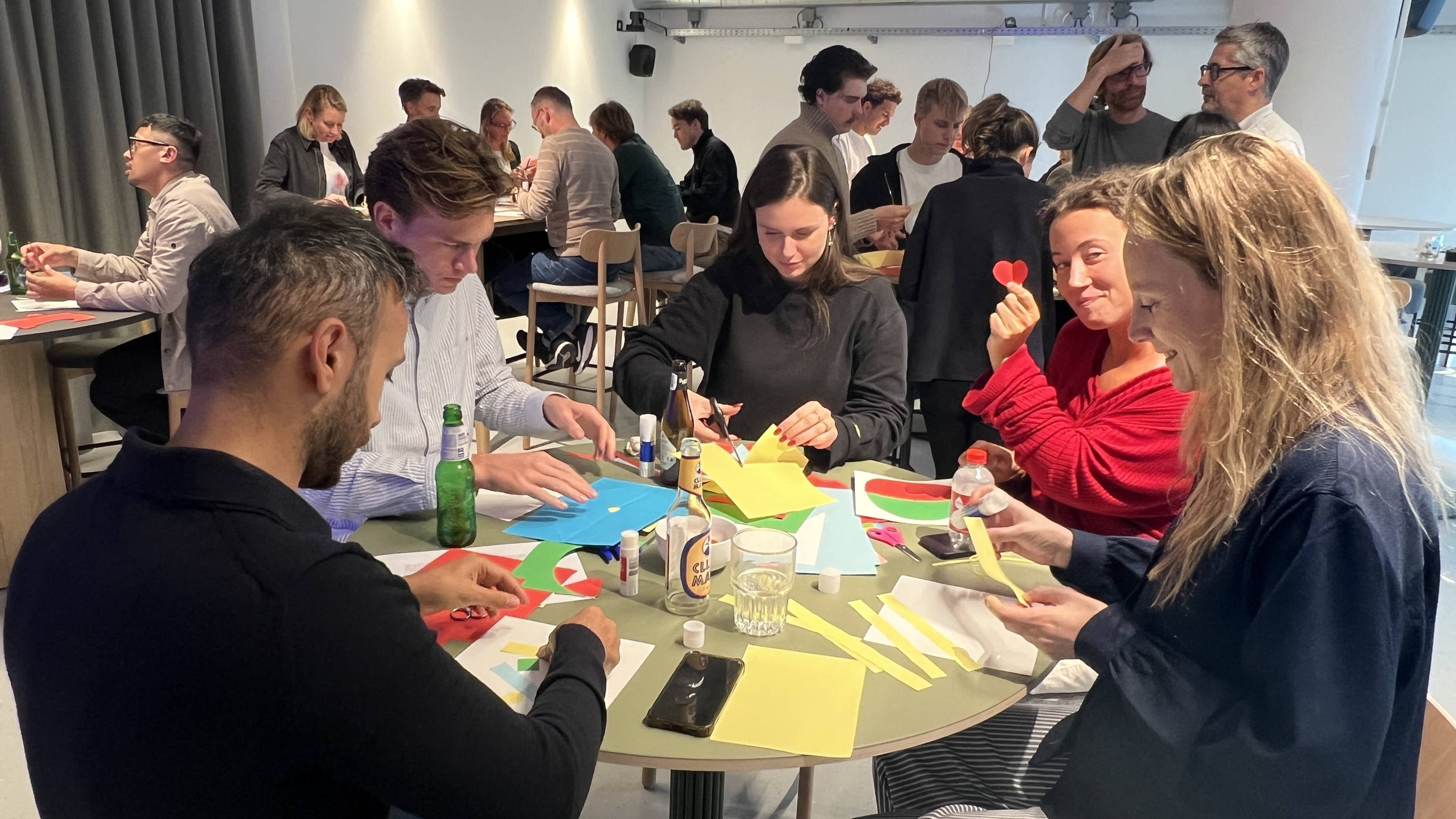
Alongside this, co-creation and evaluation sessions with UX designers at Fabrique played a crucial role. These moments challenged me to clarify assumptions, simplify complex insights, and focus on what would actually be useful in everyday design practice. Feedback from designers directly influenced the structure, language, and form of the framework.
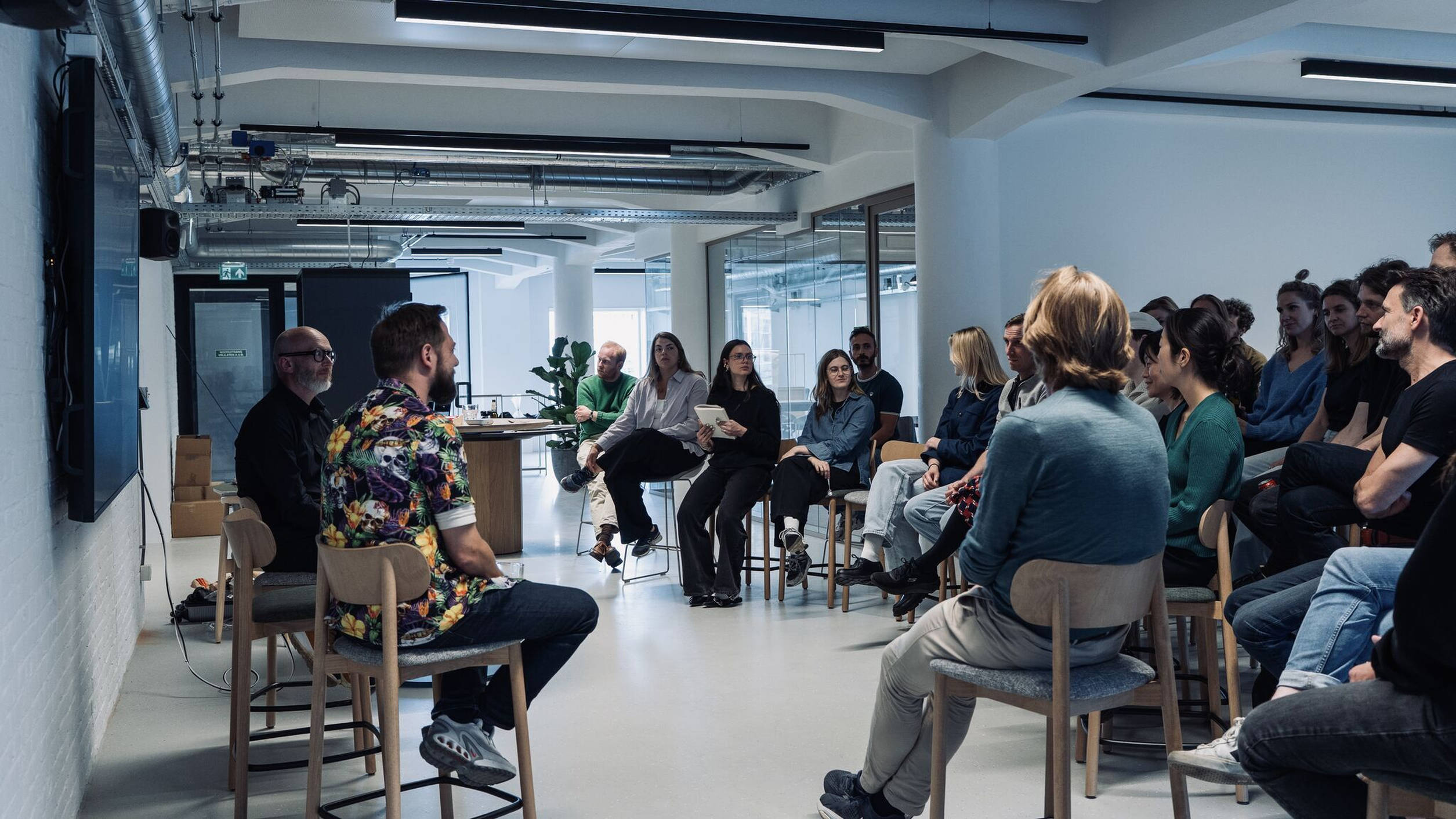
Beyond the structured sessions, what stood out to me was the agency culture itself. Inclusivity was not treated as a niche topic, but as something worth engaging with collectively. That atmosphere made the project feel less like an individual thesis and more like a shared exploration, where insights emerged through dialogue and reflection.
Looking forward
This graduation project marks the end of my master’s studies, but it has also clarified my direction as a designer. It reinforced my belief that design in public space carries a responsibility: to create environments that allow people to navigate independently, with confidence and dignity.
Looking ahead, I would like to pursue a role within a design agency, where I can continue working on complex, real-world challenges. I’m particularly inspired to work in the public space domain, merging UX, visual design, and strategic thinking to shape experiences that are both functional and human. My experience at Fabrique showed me the value of multidisciplinary collaboration and strengthened my motivation to contribute to projects that have a tangible impact on everyday life.
I’m grateful for the time I spent at Fabrique, for the people who challenged and supported me, and for the space to explore such a complex and meaningful topic. It’s an experience I’ll carry with me as I take the next steps in my career.